
 中文
中文Detailed Analysis of Structural Material Maintenance of Injection Pipe Mold
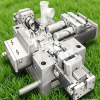
Injection mold is the core tool for th...
Gas-assisted injection molds are formed by high-pressure gas-assisted molding, which can significantly improve product accuracy and production efficiency. The core principle is: first inject part of the molten plastic (70%-95%), then inject high-pressure nitrogen to push the plastic to fill the cavity, and finally the gas pressure compensation shrinkage, forming a hollow structure.
Melt Injection
gas filling: high-pressure nitrogen (5-32MPa) penetrates the melt to form a hollow.
pressure holding cooling: gas to maintain pressure, reduce deformation.
Exhaust Demoulding: After cooling, the gas is discharged and the product is taken out.
Thesaves raw materials: 10%-30%.
shorten the cycle: 30%-50%.
eliminate shrink marks: gas pressure holding instead of plastic pressure holding.
reduce stress: hollow structure reduces warpage.
cars: bumpers, dashboards.
appliances: shell, handle.
electronics: phone case, CD tray.
Injection mold is the core tool for th...
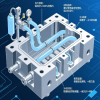
Gas-assisted mold manufacturing needs ...

In the production process of injection...
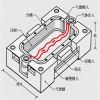
Gas-assisted injection molds are forme...