
 中文
中文Detailed Analysis of Structural Material Maintenance of Injection Pipe Mold
Injection mold is the core tool for th...
Of course
can! The following is an expanded version of the previously mentioned mold manufacturing technology trends, adding technical details, industry cases and development logic, with richer content and clearer structure:
the development trend ofmold manufacturing technology: the deep integration of precision, intelligence and green
1. Technology Breakthrough in: Precision and Efficiency Double Improvement
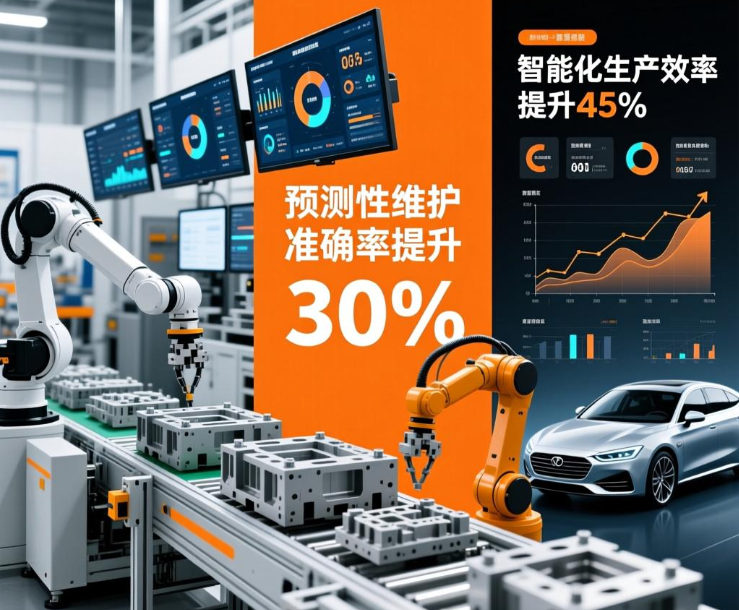
1, high speed processing technology popularizationTechnical Details: The high-speed machining center (HSC) is driven by a high-speed spindle (up to 40,000-60,000 rpm) and a linear motor to achieve a feed speed exceeding 100 m/min and a cutting acceleration of 2-3g. For example, the Swiss GF Machining Program's Mikron HSM 800 machine tool can achieve a 300 percent increase in roughing efficiency for titanium alloy molds.
Application in theindustry: In the mold processing of automotive panels, high-speed milling replaces traditional EDM, shortening the cycle from 7 days to 2 days, and the surface roughness reaches Ra 0.2 μm.
development logic: demand-driven (shortened delivery cycle in the automotive industry) and technology iteration (linear motors, ceramic tool popularization).
2, precision manufacturing to nanoscaleTechnical Details: The integrated die-casting mold for new energy vehicles shall achieve a tolerance of 0.01mm, and adopt nano-scale polishing technology (such as magnetorheological polishing) and precise temperature control (1 ℃) of hot runner system.
Industry Case: Tesla Model Y Rear Bottom Plate Die Casting Die Casting Die was completed by a 6000-ton die casting machine with a dimensional accuracy of IT5, reducing 70 welding points.
Challenges and breakthroughs: High-precision molds need to solve the problem of thermal deformation, and the cooling system is optimized through finite element analysis (FEA) to control the deformation within 0.005mm.
3, automation and intelligent penetration of the whole processTechnical Details: The robot polishing system (such as Fanaco M-710iC/50) is equipped with force control sensors to realize adaptive polishing pressure adjustment; AI vision inspection systems (such as Kion CV-X series) can identify 0.01mm defects.
industry applications: consumer electronics molds (such as mobile phone middle frame) through the intelligent detection line, the non-performing rate from 3% to 0.5, the detection efficiency increased by 5 times.
development logic: rising labor costs + demand for quality consistency drives automated substitution.
: Deep Application of CAD/CAM/CAE Technology
1. Acceleration of design and manufacturing integration
technical details: CAD/CAM software (such as Siemens NX and Dassault CATIA) integrates topology optimization algorithm to reduce mold weight by 20% while maintaining strength; CAE simulation (such as Moldflow) predicts injection defects and reduces the number of mold tests from 5 to 1.
industry case: a household appliance enterprise through integrated design, the refrigerator door mold development cycle from 6 months to 3 months.
Challenge: The problem of data silos needs to be solved by PLM systems (e. g. Teamcenter) to realize the linkage of design-process-production data.
2, reverse engineering to shorten the development cycle.technical details: 3D scanners (such as Creaform HandySCAN 3D) have an accuracy of 0.025mm, combined with Geomagic Design X software to quickly reconstruct complex surfaces.
industry application: aero engine blade mold through reverse engineering, the imitation cycle from 1 year to 3 months.
development logic: personalized customization needs (such as medical implant molds) promote the popularization of reverse technology.
: from materials to process the whole chain of change.
1. Low-carbon transitiontechnical details: use recycled plastic mold steel (e.g. S136H recycled material accounts for 30%); Vacuum heat treatment process reduces energy consumption by 40%; Dry cutting technology replaces emulsion and reduces waste liquid treatment cost by 80%.
industry case: an automobile mold factory through green process transformation, annual emission reduction of CO₂ 500 tons, the EU carbon tariff exemption.
policy-driven: The EU Battery Regulation requires the disclosure of the carbon footprint of battery molds in 2027, forcing companies to transform.
2, modular design to extend the life cycle oftechnical details: Modular molds can be quickly replaced through standardized interfaces (such as DME standard), and the maintenance time is reduced from 8 hours to 2 hours.
industry applications: electronic connector mold through modular design, life from 500000 times to 2 million times, the cost is reduced by 35%.
Business Logic: Under the trend of manufacturing service, mold enterprises obtain sustainable benefits by extending the life cycle.
: Industry Synergy and Performance Breakthrough
3, the degree of standardization to improveTechnical Details: The coverage rate of China's mold standard parts increased from 45% in 2015 to 65% in 2023, reducing the cost of non-standard customization by 30%.
industry example: Toyota reduced global supplier switching time from 6 months to 1 month by standardizing molds.
challenge: the lack of standardization awareness of small and medium-sized enterprises needs to be promoted through industry associations.
4, New materials and surface treatment technologytechnical details: pre-hardened steel (e. g. 718H) has a hardness of HRC 35-40, reducing heat treatment deformation; Corrosion-resistant steel (e. g. S136) has a 10-fold increase in life in seawater environment. PVD coating (e. g. TiAlN) prolongs mold life by 3-5 times.
Application inindustry: The photovoltaic cell die is made of silicon carbide ceramic material, which is resistant to high temperature up to 1600 ℃ and the efficiency is increased by 20%.
development logic: extreme operating conditions (such as aerospace, nuclear energy) to promote material innovation.
: Technology Convergence and Industrial Upgrading
Intelligent Upgrade: 5G + Industrial Internet Realizes Remote Monitoring of Mold, Predictive Maintenance Reduces Downtime by 40%.
Greening Deepening: Hydrogen energy die steel smelting technology (such as hydrogen-based direct reduced iron) reduces carbon emissions to 10% of traditional processes.
global competition: China's mold enterprises through digital + green two-wheel drive, the proportion of exports increased from 15% to 25%.
Injection mold is the core tool for th...
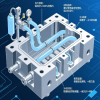
Gas-assisted mold manufacturing needs ...

Of course you can! The following is an...
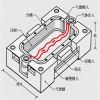
Gas-assisted injection molds are forme...